Reports FY 2026
OUJ Hosts the13th OUJ-OUC-KNOU International Seminar
Exploring the Universality and Cultural Specificity of Distance Education
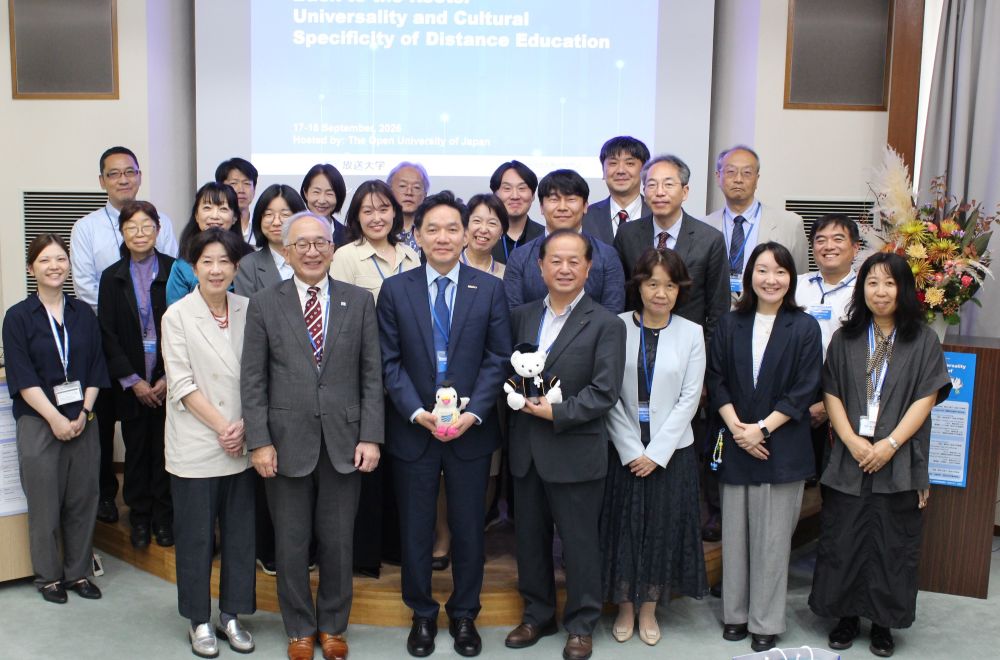
The Open University of Japan (OUJ) hosted the 13th OUJ-OUC-KNOU International Seminar on September 17–18, 2026 under the theme “Back to the Roots: Universality and Cultural Specificity of Distance Education.” The seminar brought together faculty members and university leaders from Japan and South Korea to reflect on the fundamental principles of distance education, explore innovative teaching practices, and discuss future directions for open and distance learning.
A six-member delegation from Korea National Open University (KNOU), led by President Jongoh Kim, participated in the event.
On September 17, OUJ hosted a welcome reception for the KNOU delegation. Professor Emi Nishina, Director of the OUJ Library, served as master of ceremonies. The reception brought together faculty and staff members from OUJ and representatives from KNOU, providing an opportunity to renew friendships, strengthen institutional ties, and exchange perspectives in a warm and collegial atmosphere.
International Seminar – September 18
The seminar opened with welcoming remarks by President Masaya Iwanaga and KNOU President Jongoh Kim. Professor Kumiko Aoki served as master of ceremonies.
The academic program consisted of two sessions, each addressing a key dimension of distance education: the significance of interaction in learning and the relationship between pedagogical traditions and technological innovation.
Session 1:The Significance of Interaction in Learning
Session Chair: Professor Yumiko Nara
Associate Professor Akira Konita (OUJ):
“Remote Education of Historical Research Skills — Practice and Possibilities.”
Associate Professor Konita examined the possibilities of teaching historical research skills through distance education, particularly the interpretation of historical sources, which has traditionally relied heavily on face-to-face instruction. Drawing on an analysis of teaching practices at distance-learning universities, he proposed a course design incorporating live-streamed sessions focused on reading and interpreting historical documents. He emphasized that direct engagement with historical sources can help students develop a more vivid understanding of the past while strengthening their ability to critically evaluate information.
Associate Professor Jooyeon Ryu (KNOU):
“Educational Interaction in Early Childhood and Higher Education.”
Associate Professor Ryu explored the role of educational interaction in early childhood and higher education, highlighting two essential dimensions: human relationships grounded in emotional exchange and reciprocal learning. She emphasized that both dimensions are particularly important in distance education, where learners may experience feelings of isolation. Meaningful interaction can foster a sense of connection while encouraging deeper engagement and critical thinking. Her presentation also highlighted the importance of designing learning environments that incorporate emerging technologies while maintaining a strong emphasis on personalization and emotional connection.
Session 2 : Pedagogical Traditions and Innovations
Session Chair: Professor Hajime Furuhashi
Professor Namhyung Lee (KNOU)
“Preserving Tradition, Augmenting Instruction: Two AI-Scaffolded Assessment Designs at Korea National Open University.”
Professor Lee explored how generative AI can be integrated into distance education to support more meaningful approaches to student assessment. Drawing on practices at KNOU, he presented two assessment designs. The first focused on making undergraduate students’ interactions with generative AI visible, particularly their prompting processes. The second examined how AI could support the assessment of graduate-level assignments while preserving instructors’ professional judgment. His presentation emphasized the importance of moving beyond approaches focused primarily on detecting inappropriate AI use. Instead, he advocated assessment designs that make students’ thinking and learning processes visible, enabling educators to evaluate not only what students produce but also how they learn.
Professor Soichi Omori (OUJ)
“Is a Virtual Geological Excursion Merely an Alternative to an On-site Excursion, or Can It Go Beyond?”
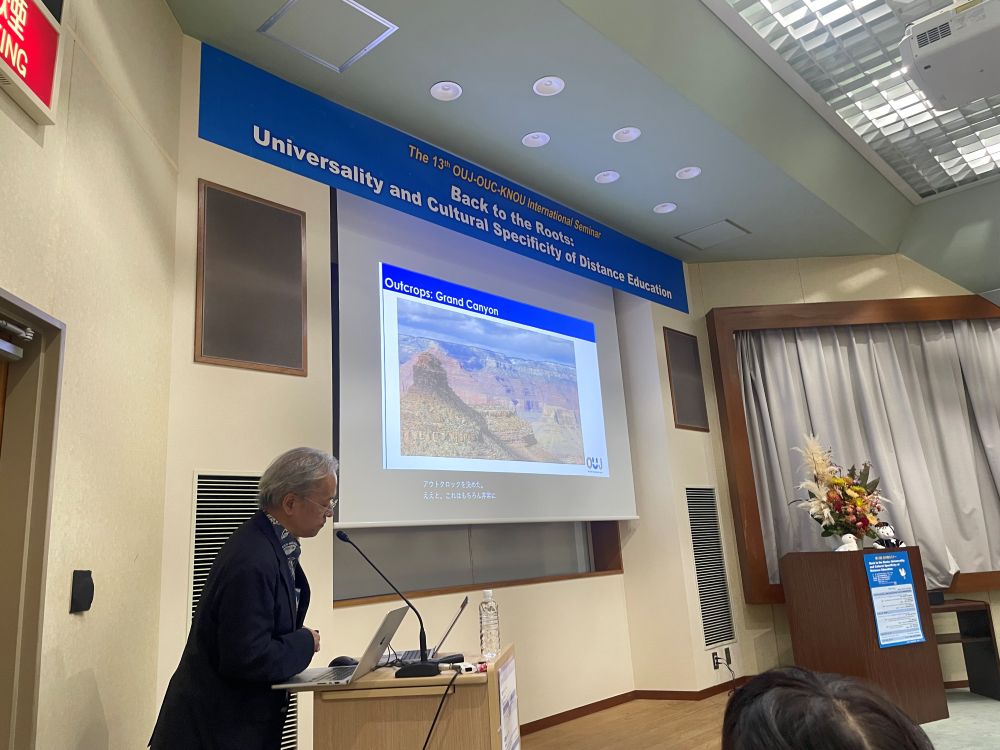
Professor Omori presented the development of virtual reality (VR) learning materials designed to enhance geological field education in distance-learning environments. The system combines 8K-resolution, 360-degree video with layered annotations, including explanatory information and analytical data. This approach enables students to explore geological sites virtually while accessing information that may not be readily available during conventional field excursions. His presentation demonstrated that virtual geological excursions can do more than overcome geographical barriers. By integrating immersive visual experiences with supplementary educational resources, VR technology has the potential to offer learning opportunities that extend beyond those available through traditional on-site excursions.
The 13th OUJ-OUC-KNOU International Seminar
Discussion and Closing Remarks
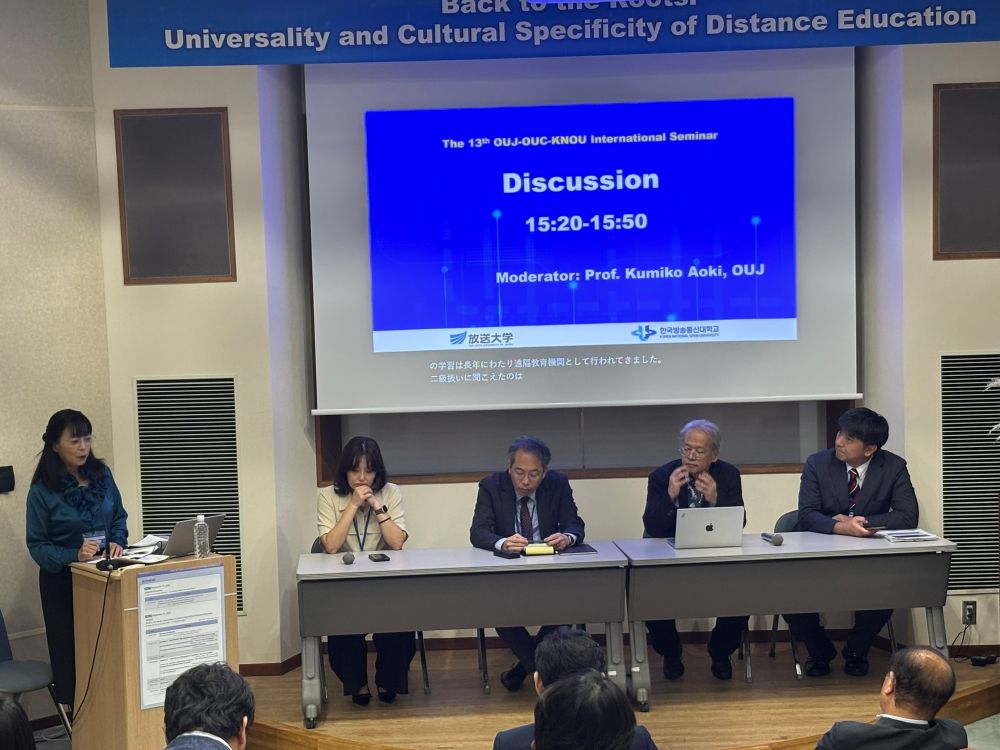
Following the presentations, Professor Kumiko Aoki moderated a discussion featuring questions and comments from participants. The discussion addressed a wide range of issues, including the role of human interaction in distance education, the integration of generative AI into assessment, and the educational possibilities of immersive technologies. Participants exchanged perspectives on how established pedagogical practices can be preserved and enhanced through technological innovation while maintaining a focus on meaningful student learning.
The seminar concluded with a summary and closing remarks by Mr. Takahashi, Chairperson of the OUJ Foundation.
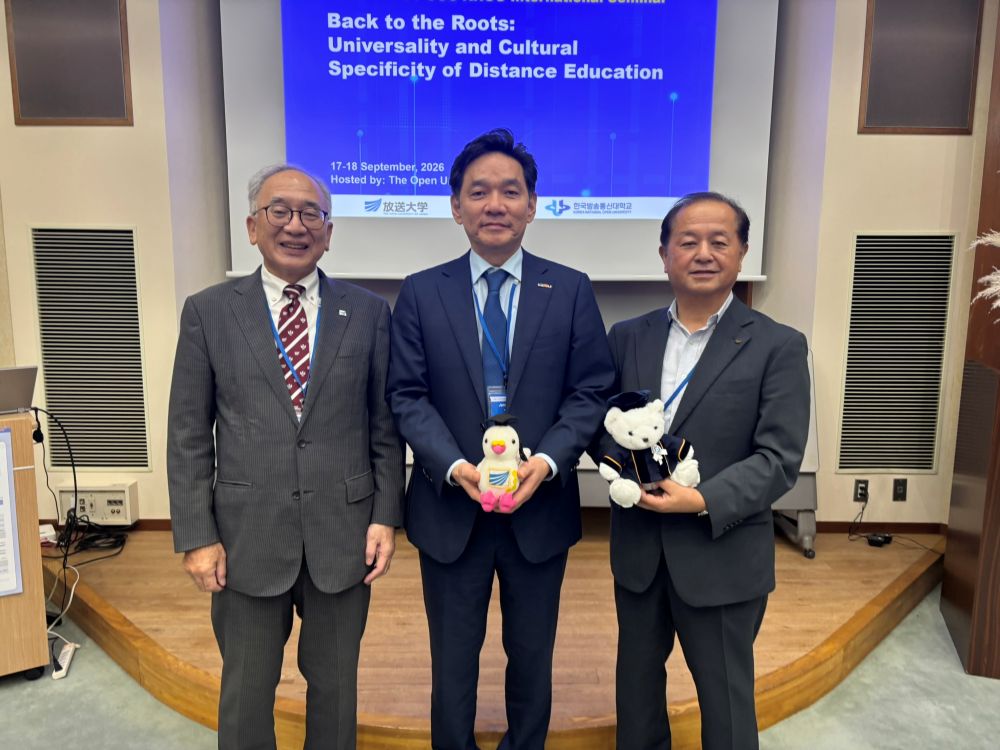
(left)Mr.Takahashi, Chairperson of OUJ Foundatin
(center) President Kim of KNOU
(right)President Iwanaga
The Open University of Japan Signs Memorandum of Understanding with Universitas Terbuka, Indonesia
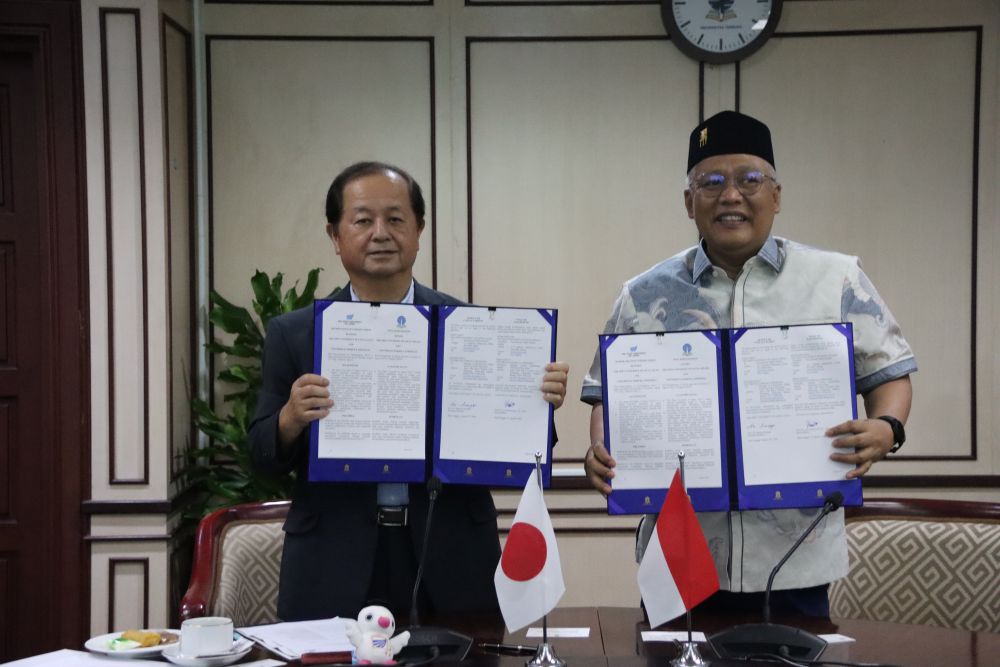
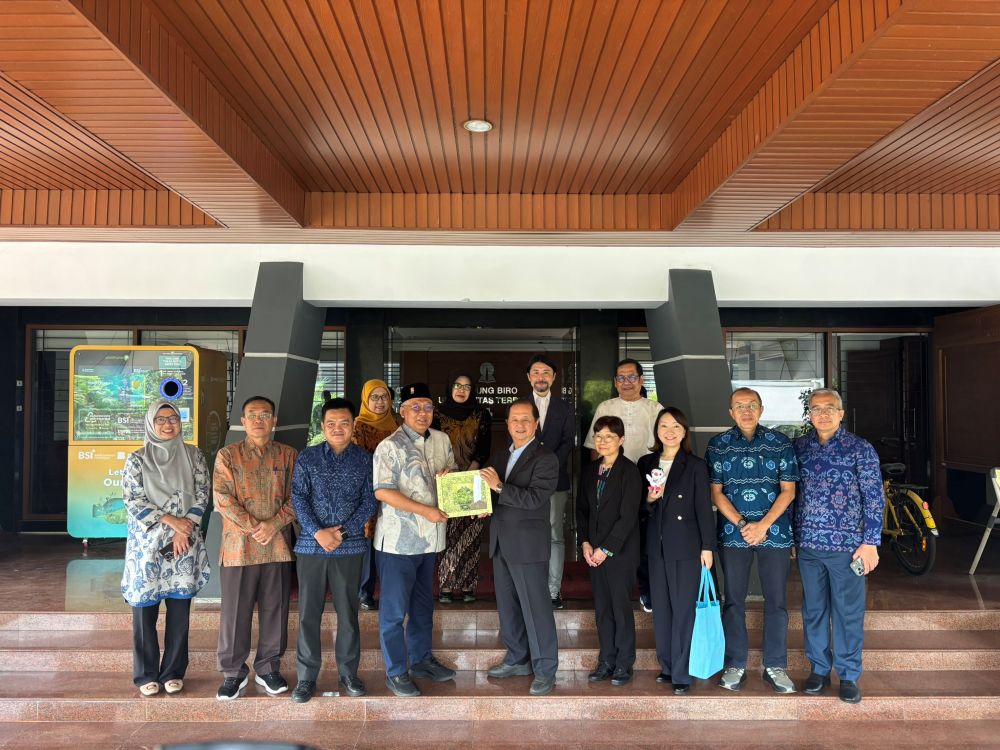
On August 27, 2026, a delegation from the Open University of Japan (OUJ), led by President Masaya Iwanaga, visited Universitas Terbuka (UT) in South Tangerang, near Jakarta, Indonesia, to attend a ceremony marking the signing of a Memorandum of Understanding (MOU) between the two universities.
The OUJ delegation included Professor Emi Nishina, Director of the OUJ Library; Mr. Utsunomiya, Assistant Head of the Study Center Affairs Division; and Ms. Watanabe, Head of the International Affairs Section.
Established in 1984 as Indonesia’s 45th national university, UT was the country’s first university dedicated to open and distance education. UT offers undergraduate, master’s, and doctoral programs, and serves approximately 670,000 students in Indonesia and abroad (as of 2024).
OUJ and UT have developed their relationship through mutual visits and participation in international academic events. Discussions about formalizing their cooperation began in 2025, when an OUJ faculty member was invited to speak at an international conference hosted by UT. The signing of the MOU marks a significant step toward strengthening ties between the institutions.
The ceremony was attended by 12 UT representatives, including Rector Ali Muktiyanto.
Following the signing, Rector Muktiyanto and President Iwanaga delivered remarks, and Professor Nishina introduced OUJ. Participants then exchanged views in an informal atmosphere.
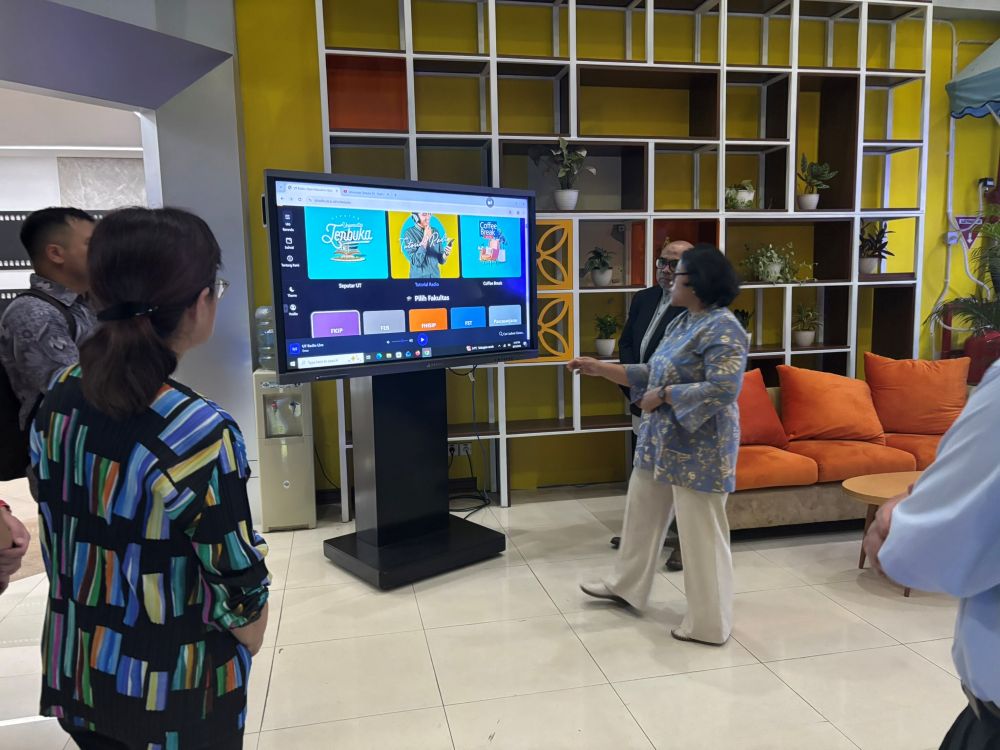
The OUJ delegation subsequently toured the UT campus, visiting Multimedia Center, where video-based learning materials are produced, as well as a storage facility for printed materials, the library, and the ceremonial hall. The tour offered valuable insights into UT’s educational environment and its production of educational resources.
Building on the MOU, OUJ and UT plan to promote exchanges among faculty and administrative staff and share information and expertise concerning educational materials, education systems, and international outreach. The agreement provides a foundation for further cooperation in open and distance education.
Visit Report on Indonesian University Representatives
August 24, 2026
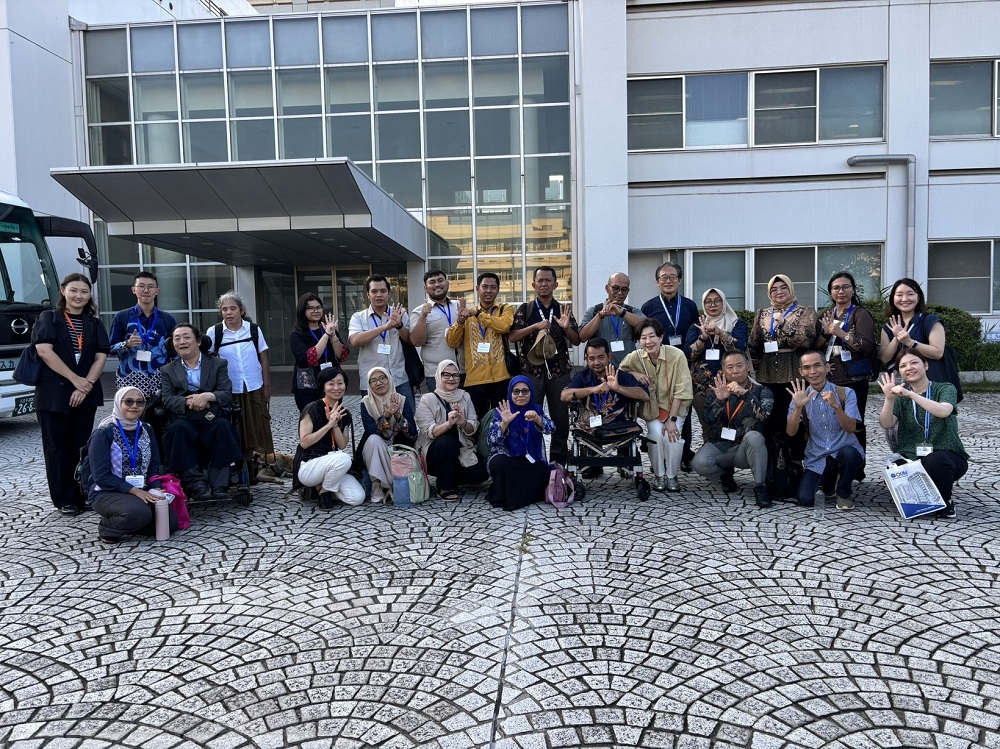
On Monday, August 24, 2026, a delegation of 17 university representatives from Indonesia visited OUJ as part of a project aimed at supporting students with disabilities in Indonesian higher education.
The visit began with a courtesy call on President Iwanaga, who welcomed the delegation and delivered opening remarks.
The delegation then attended presentations by Specially Appointed Professor Yoko Hirose and Professor Tetsuya Kakuda on OUJ’s initiatives to support students with disabilities. The presentations generated considerable interest and were followed by an active question-and-answer session.
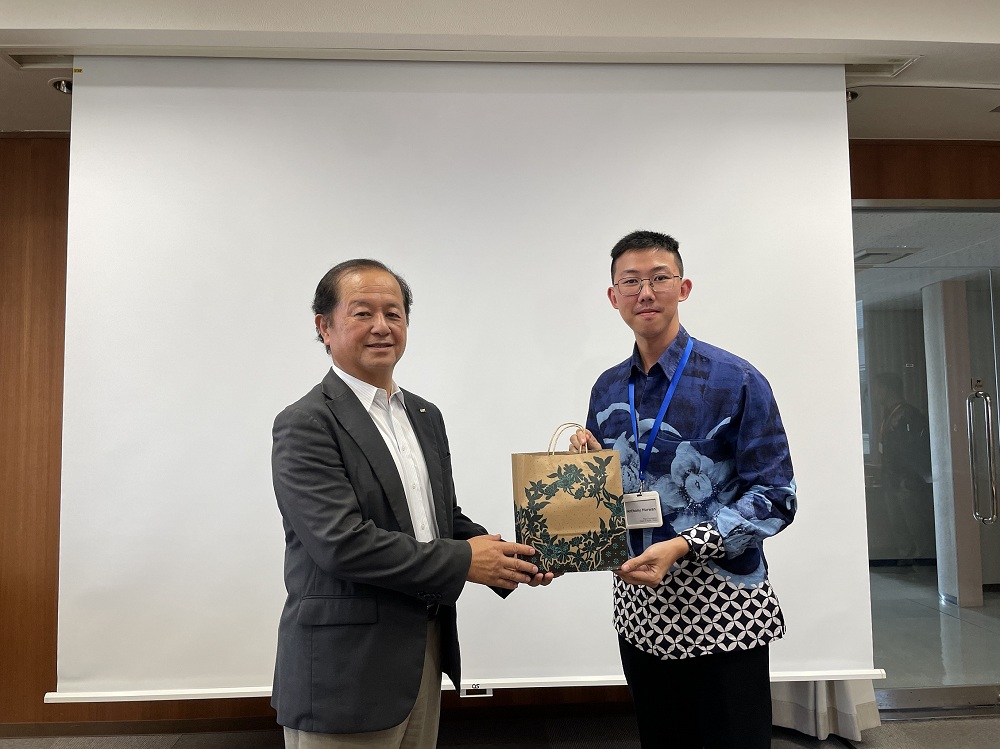
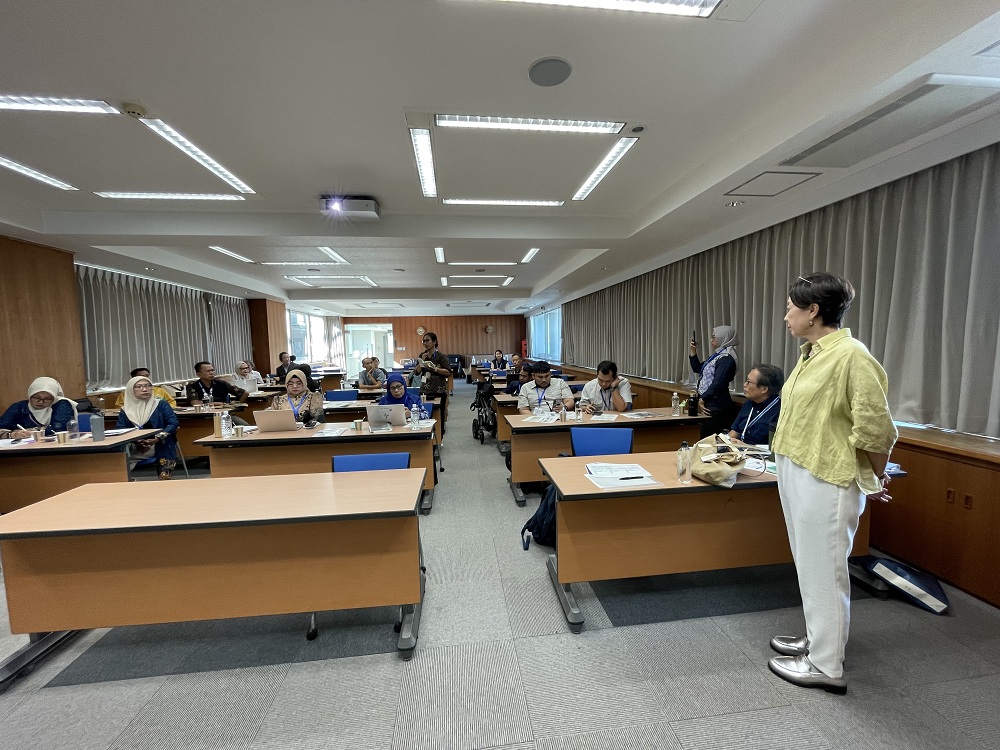
The visitors subsequently toured OUJ’s broadcasting facilities, with assistance from the Department of Broadcasting and the Department of Production. During their visits to the television studios and the art-props storage area, they asked a wide range of questions about the facilities and television program production.
The visit offered a valuable opportunity to share experiences and discuss initiatives and challenges related to supporting students with disabilities in higher education. The Indonesian representatives expressed their appreciation for the opportunity and noted that the visit had provided valuable insights and lessons to take back to their institutions.